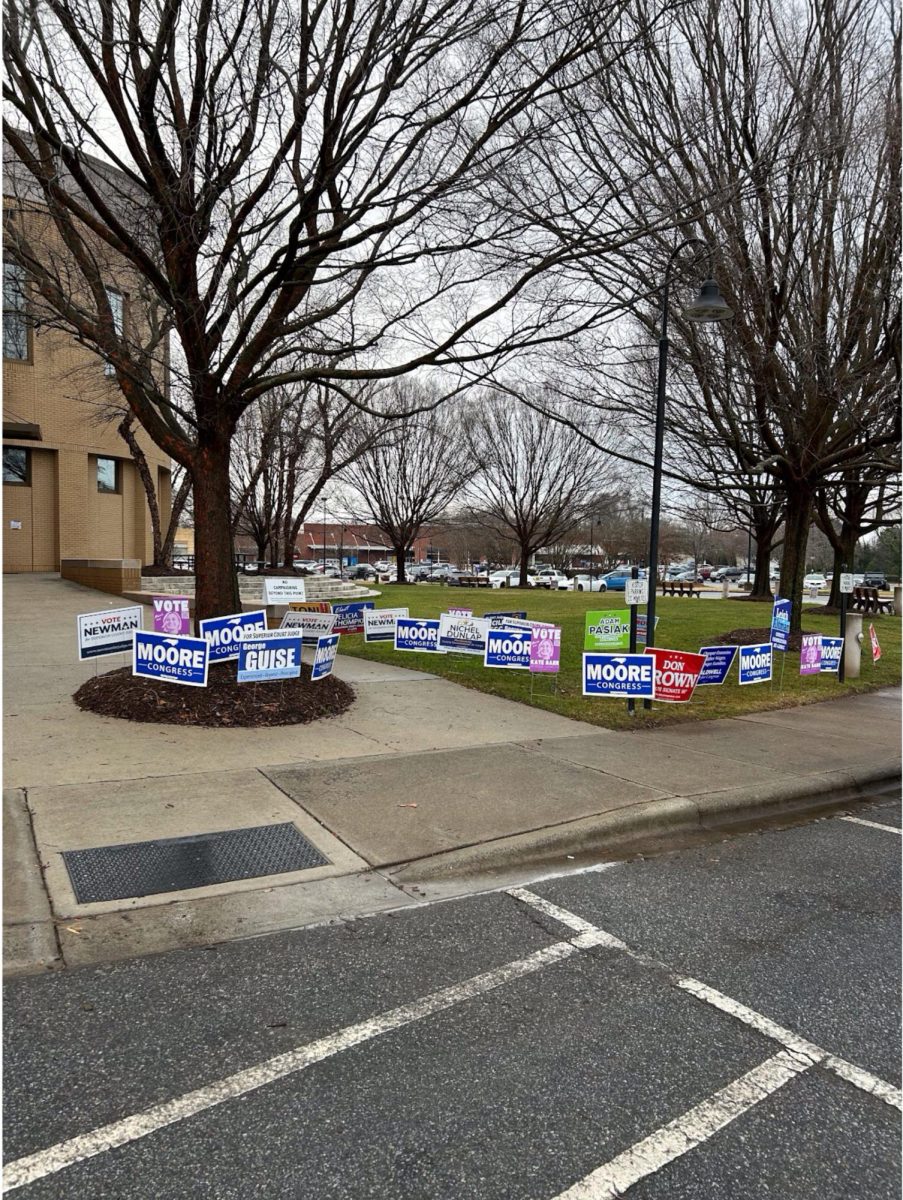
On March 3, 2026, Congressional districts all across America will be running primary elections in preparation for midterm elections in November of this year.
Across the Tarheel State, the primary election includes voting on positions like judges, Mecklenburg county’s sheriff, county commissioners and the hotly contested seat in the United States House of Representatives.
In North Carolina’s 14th Congressional District (which includes Huntersville, Cornelius and Davidson, and additionally stretches south to the South Carolina border and west all the way to Chimney Rock) the highest profile race is for a seat in the United States House of Representatives.
Primaries are different from the general election that takes place in November. Primaries are meant to decide which candidate from each party is going to run in the general election.
Different states have differing laws on who can vote in each party’s primary.
North Carolina has an “open primary,” where voters who are not affiliated with either party can vote in either primary. However, they may only vote in one primary.
Anthony Yodice, U.S. Government and Politics teacher at the Community School of Davidson (CSD), said that open primaries are a source of controversy.
“Some people don’t like [open primaries],” Anthony Yodice said. “They think people who lean Democrat can try to sabotage Republicans and vice versa.”
For NC’s 14th Congressional District, the Democrats on the ballot for the primary are Brent Caldwell, Ahmid Kargbo and Lakesha Womack. They are all running against each other to be the Democratic candidate on the ballot this November.
The Republican race in the 14th District appears to be a bit more interesting. Timothy Moore, who is the current incumbent for the District, is running against challenger Kate Barr. Between the two candidates, only Mr. Moore is endorsed by President Donald Trump. Ms. Barr is a progressive running as a Republican because she claims that “In NC, our voting maps are rigged to make sure the Republican candidate will win the general election,” according to Ms. Barr’s campaign website.
In North Carolina, voter turnout for primaries is historically a lot lower than the turnout for the general elections, with only around 20% of eligible voters showing up to the polls for primaries, according to the North Carolina State Board of Elections.
However, Yodice said that primaries can still be important in deciding who represents the citizens of a district.
“[Primaries] determine who will represent each party in the election, more specifically in heavily gerrymandered districts, and/or areas dominated by one party, they determine who will be elected,” Yodice said.
This makes it important for those who are able to vote in primaries to do so. Many seniors at CSD will have the opportunity to be able to vote for the first time, and the upcoming primary election is the perfect opportunity for seniors to have their chance to vote for the first time and ensure their voice is heard.