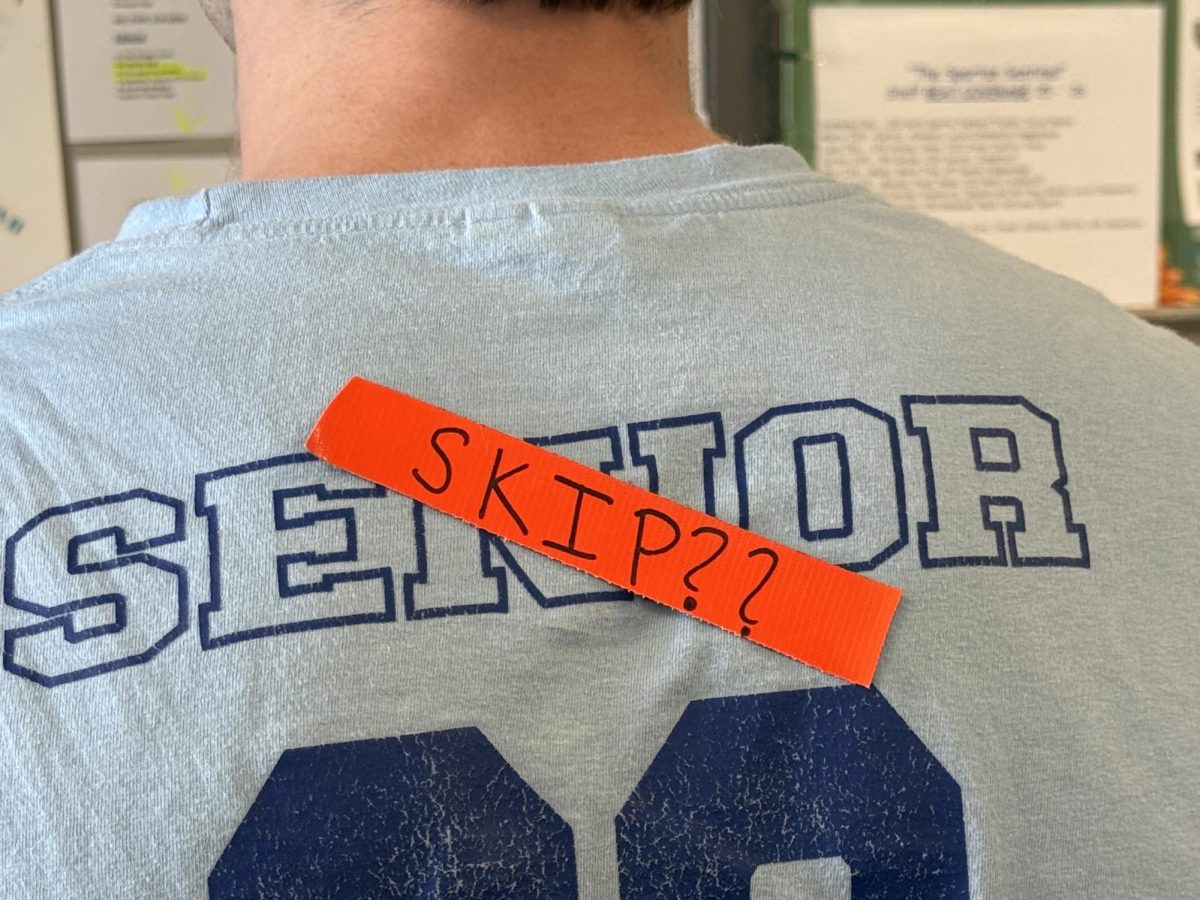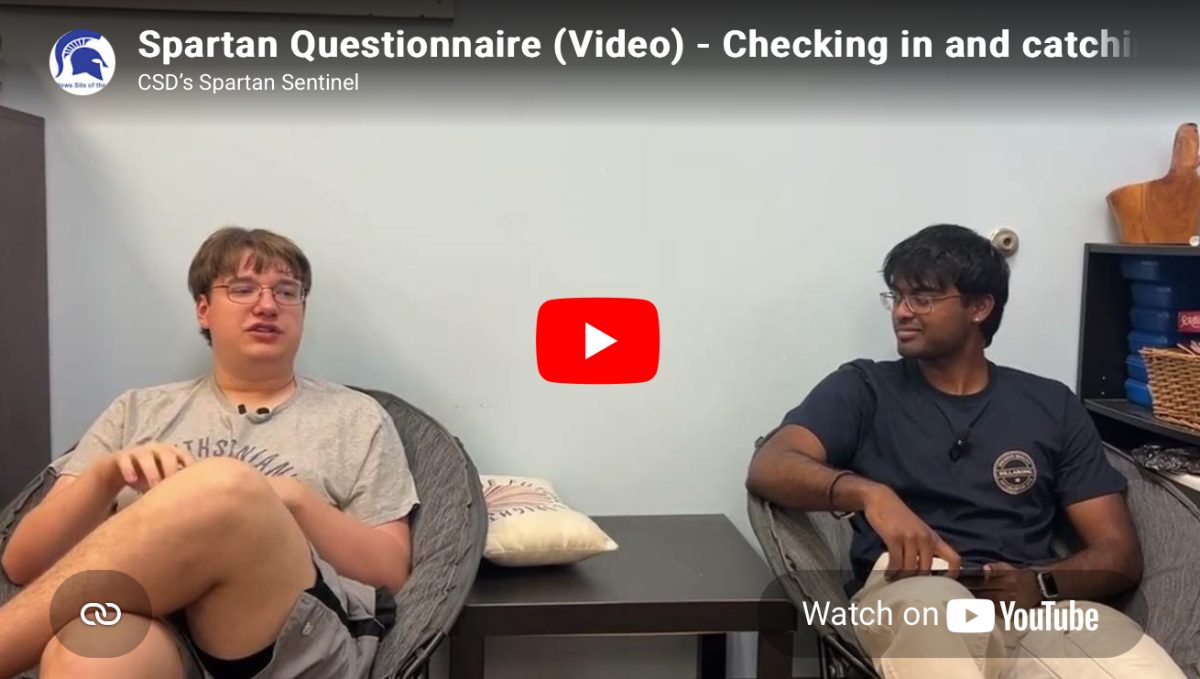

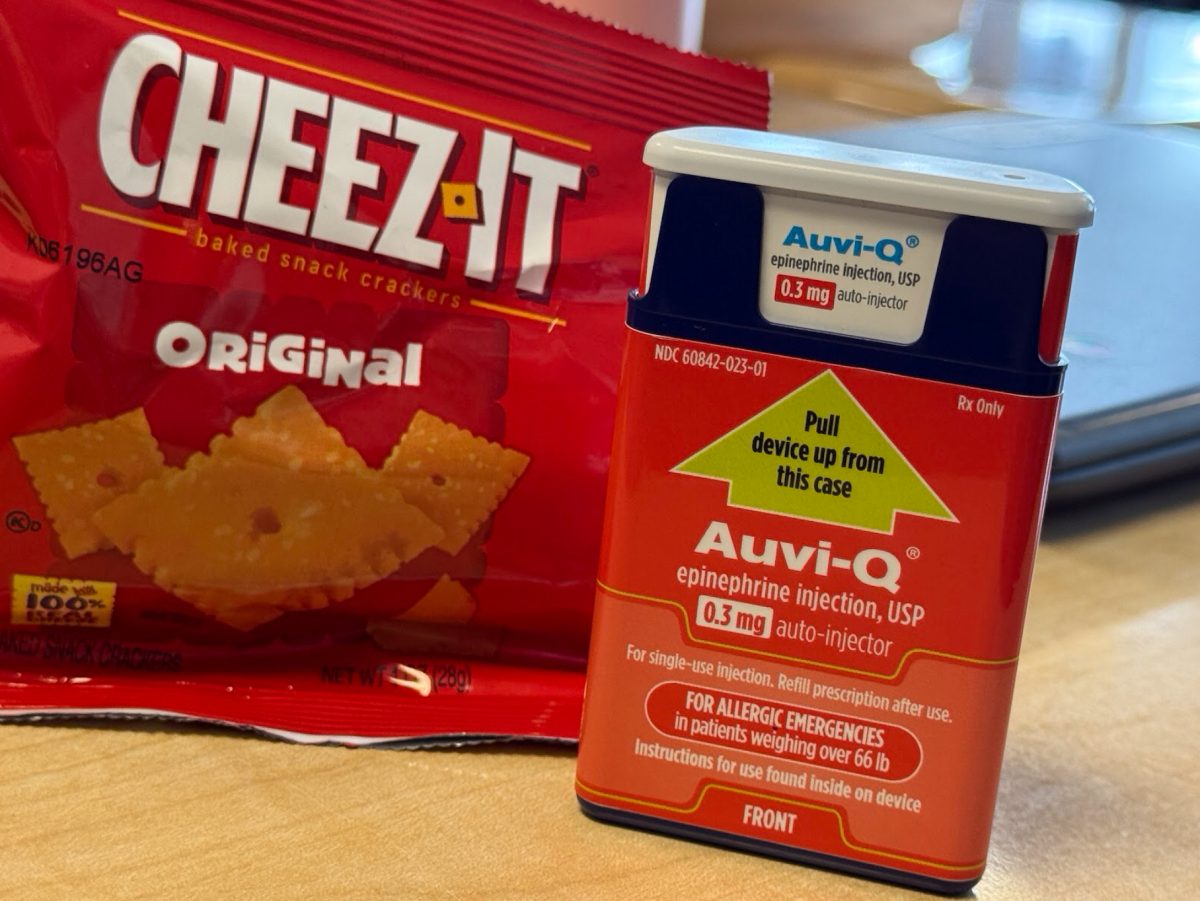
The first day of school can be overwhelming for somebody with an allergy. Even the food celebrations for spaces such as advisory lunch and senior sunrise require navigation on the first day for individuals with allergies. The stress in potentially life-threatening allergic reactions can be overwhelming.
So what is it like to have a food allergy?
Difficulties/Benefits
Growing up with food allergies, as 1 in 13 American children do, can affect decision-making in lots of interesting ways. While allergies undoubtedly make everyday life more complicated, they can also have benefits.
A big part of growing up is learning to be responsible. Having allergies can force a kind of vigilance from an early age that others learn slowly as they grow up. Many kids with allergies learn to always be watching when food comes out at school. They learn to communicate with their teachers about food-related events and science experiments, things that others may not think much about.
All this paying attention can start as early as pre-school or kindergarten, and never stops because food is around all the time. It can be tiring to constantly double-check with teachers, hosts, and waiters. Not being able to reach for snacks in open bowls (for risk of cross-contamination) can be frustrating.
And not only that, but the feeling of being something ‘other’ than friends is one of the hardest things about growing up with food allergies. Food is something lots of people use to connect, and being on the outside of that means more than you’d expect.
Think kids’ birthday parties featuring pizza, sports team meals, and family recipes. These are just a few ways food becomes a centerpiece of relationships, and missing out can be hard, especially for a kid still learning to socialize.
But the lowest lows come with the highest highs in many areas of life, and one of those is connection. Everyone has a reason they feel disconnected from others, and the best feeling isn’t when that gap disappears; it’s when someone builds a bridge.
Learning to assess risk is another important part of growing up that can be impacted by the experience of having food allergies.
The risk of having an allergic reaction is one you can bring down most of the way by eating food you make at home or ordering simple dishes at restaurants you visit regularly. Not all of life’s risks can be fully eradicated, though. Sometimes you have to accept that something bad might happen.
Food allergies can put much of life into perspective in a unique way. While it’s not always easy, allergies force people to learn responsibility, good communication skills, risk assessment, self-advocacy, and so much more.
Awareness
Walking into a restaurant with an allergy can either be a sauna experience or a living nightmare.
Restaurants, some better than others, prioritize allergies at varying levels. Some will have an extensive online menu showing what allergens are present and which aren’t, and others will have no such menu at all. People don’t usually think about this, and it can make trying a new restaurant a nightmare if you have an allergy, as you have to communicate extensively about it.
Employees at most restaurants are taught to be aware of allergies, but unfortunately, it’s very common that most employees don’t know what’s even being used in the food, so oftentimes it’s best to resort to a manager or chef leading the restaurant, even though it can be extra work. When your allergy is severe, it’s a necessary step to stay safe and avoid an event.
The most important thing for others to be aware of is that when your friend has an allergy, they need patience most of all. The most difficult thing is when you’re out with friends and everybody goes silent and watches you eat very carefully or tries to add pressure on the situation.
Advocating
The average experience can be overwhelming. Advocacy is necessary for safety when it comes to going out to eat, but it is most definitely not easy at a young age, as you don’t at a younger age you don’t.
Unfortunately, there are two major issues that pose challenges to advocating for allergies. Awareness of these two issues can majorly help those with allergies be safer and feel more confident eating out, which awareness of these two issues can make a restaurant more inviting, safer, and overall a better environment.
The first issue is quick judgment. Many waiters can be quick to judge what your allergy is. For example, if you tell them you have an allergy to gluten, they can confuse this with other common allergies such as wheat. This can be circumvented by advocating for what your allergy can be confused with and being more specific.
Circumvention can also come from the employee being more aware of what an allergy means exactly, and if you’re an employee, the most helpful tool can be asking for clarification.
The second main issue is overconfidence. Some of the worst allergic reactions happen due to overconfidence. This happens when an employee or manager has a bias that makes them believe they are “sure” a food is allergen-free even when it’s not. Giving the wrong information can quickly create an allergic reaction scenario.
The most important skill to learn when advocating and when serving is not to get annoyed or feel untrusting when questioned. This keeps those with the allergy safe, and it’s important that those serving know it’s not due to mistrust but rather due to absolute safety, even when an allergy is severe.

(Elena Cunningham)
Author’s statements….
Elena –
As a pre-schooler, I knew to be on high alert the minute food showed up in a class activity. I knew to ask my teachers if my mom had been involved in deciding what was safe for me, and ask them to call her (or not take food) if she hadn’t. During lunch and snacktimes, I knew I had to stay aware, since my classmates were still learning how to manage food in a controlled way. Having trained my attentiveness, that young person prepared me to quickly make decisions, assess risk, and look out for myself.
Not only are we thinking about risk all the time (risk of cross contamination, risk of a restaurant not having anything we can eat, etc), but the decisions we make on a daily basis come with high stakes.
All this paying attention started as soon as I learned to say what I was allergic to and hasn’t stopped since. I was a kid, and sometimes I just didn’t feel like double-checking with teachers and parents of friends if foods were safe.
Recently, I have been seeing more and more the ways this has affected my perception of other, more normal risks. As I have learned to take more risks with food (visiting new restaurants, eating food labeled as made in a facility with my allergens, etc.), I have recognized the value in accepting life’s risks to get to life’s rewards.
Allergies can bring about connection, too. Some of the people I admire the most are the ones who make sure I have something safe at gatherings and events. Many friends have familiarized themselves with my allergies over the years and helped with small things so I could enjoy social settings more.
Some of the people I admire the most are the ones who make sure I have something safe at gatherings and events.
Maxwell –
Living with a severe food allergy has been difficult, as it has been one I’ve had over my whole life. But like with any unique difficulty in life that many face, I have adapted since the beginning of my life.
As a baby, I was fed cake and would cry endlessly, but from others’ perspectives, they thought just more cake would make me happy.
I grew up learning that self-advocacy is the most important skill that I could have for myself, and it helped me develop my self-voice.
Understanding the difficulties others face with severe food allergies is the primary reason I chose to co-write this story with Elena to help educate others on the difficulties those with allergies face, and to help people in the school community know how to be more understanding and inclusive.