
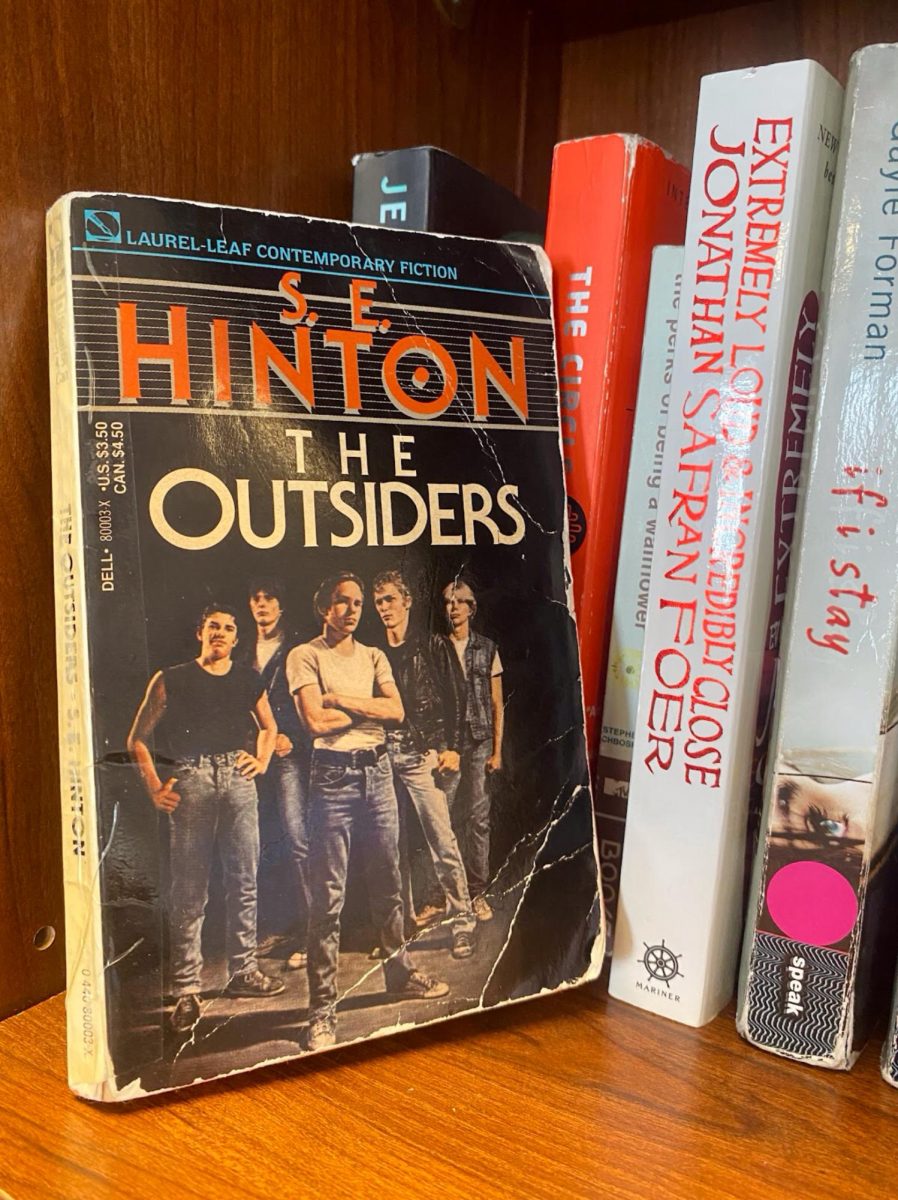
S. E. Hinton started her first novel, “The Outsiders,” at 15 years old. Many teenagers sometimes wish they could be free of their parents’ rules, but Hinton wisely used her novel to showcase the things we, as teens, may take for granted.
“I am a former twelve-year-old, and I can remember how thrilling it was to read books where the kids were off on their own, fighting and outsmarting adults, dealing with harsh landscapes, facing their deepest fears, making unforgettable friendships, and, while I didn’t know it at the time, learning how to be adults,” Nathan Bransford, author of “How to Write a Novel” and the “Jacob Wonderbar” series, wrote in a blog post titled “In Defense of Dead and Absent Parents in Children’s Literature.”
While an absence of adults is a way to pull in young readers who would love to imagine full freedom, “The Outsiders” emphasizes all that can go wrong when children are left without guidance.
“The Outsiders” is set in Tulsa, OK, in 1967 and narrated by Ponyboy Curtis, a 14 year-old recently left parentless due to a car crash. His oldest brother, Darry, is 20 and has custody of Pony and the middle brother, Sodapop. The boys are each other’s only blood, but they spend their time with the rest of their ‘brothers’: Johnny, Randy, Two-Bit, and Dallas. Two-Bit is the only one of the boys who has a parent he gets along with, and even she is an absentee mother.
Hinton highlights the boys’ lack of authoritative figures with small details like the fact that the Curtis fridge is always stocked with chocolate cake, as well as more impactful ones.
In the opening scene, Pony is jumped while walking through unsafe parts of town because he doesn’t want to bother his friends for a ride home from the movies. Because he has friends who could drive him home, readers may miss the difference in the dynamic between a kid and his friends versus him and his parents. This could lead to an assumption that Pony, not thinking, simply didn’t arrange a ride. However, having parents around can elicit a different attitude about asking for help, since it’s widely seen as a parent’s job to figure out rides for their kids.
Ponyboy’s best friend is a boy named Johnny Cade, a small 16 year-old, timid from growing up in an abusive household. Johnny is in a similar predicament to Pony when he wants to get around town, having no way to do so other than walk alone, which has presented the opportunity for him to be brutally beaten. His friends find him and help him, but not until after his attackers have gone. They have their own lives, and they aren’t responsible for Johnny, as much as they love him. No one in Johnny’s life serves a parental role in taking care of him.
Pony and Johnny weren’t attacked at random. They are Greasers: poor kids from the East Side of Tulsa, also known as favorite targets of the Socs, named in reference to socialites. Socs are rich, smart, and mean. Unlike Greasers, they aren’t constantly occupied with jobs, and many like to fill their time picking fights with Greasers. Socs always have the upper hand in life, they get all the lucky breaks, and flaunting their power is their favorite thing to do–at least that’s how Greasers see it.
So it’s no surprise that when Pony and Johnny meet two nice Soc girls at a Drive-In on a Friday night and walk them home, their mean Soc boyfriends have something to say about it. Pony has a fight with his brother, Darry, about staying out late, and it ends when Pony runs away (the icing on the cake of brewing violence for the night). While Pony is recovering from the fight, he and Johnny are found by Socs.
The leader of this Soc gang, Bob, tries to drown Ponyboy in a fountain, and Johnny accidentally kills Bob in his friend’s defense.
As a reader thinking about how this story would have changed with the presence of any guiding adult, it helps to pause here for two purposes.
The first is to imagine hearing about this event after it happened, especially as a “Soc” with a healthy family dynamic and parents who serve a conventionally parental role in your life. It would be easy to be convinced that Pony and Johnny were out looking for a fight, instead of what they were: looking for a place where they were wanted, a home they belonged in.
Pony and Johnny didn’t have parents to help them understand that it was unsafe to be out. Pony had a brother who he was fighting with, like brothers do, but they didn’t have the luxury of a brotherly argument with no real consequences; theirs made Pony feel alone enough to run away, without parents to stabilize the situation.
The second purpose for pausing here is to emphasize what comes next. Pony and Johnny need help, and they decide their best bet is Dallas Winston. Dally is from New York, and has a reputation for being the meanest, scariest Greaser. He’s been in jail for everything–stealing, destruction of property, assault–and everyone knows it.
As scared of him as everyone is, Dally is good to his friends and the most loyal of them all. He loves Pony and Johnny like little brothers, and he does his best to help them. He finds them an abandoned church to lay low in while emotions fade, and gives them all his money and a weapon so they can support themselves as long as it takes. This is all he knows to do; Dally hasn’t had an adult’s guidance since he was at least ten, and his record shows it. He became hard and found a way to survive, but he lacks the experience and calm wisdom many associate with their parents.
Throughout the book, Pony, Johnny, and the rest of their friends struggle with problems they may not have had if they’d had adult guidance. So many of us are used to being warned before things happen–I know my mom always tells me when there has been violence at Birkdale or a certain mall so I’ll avoid going there with my friends for a couple of days. I can’t imagine how many “wrong place, wrong time” issues would come up if I didn’t have people looking out for me.
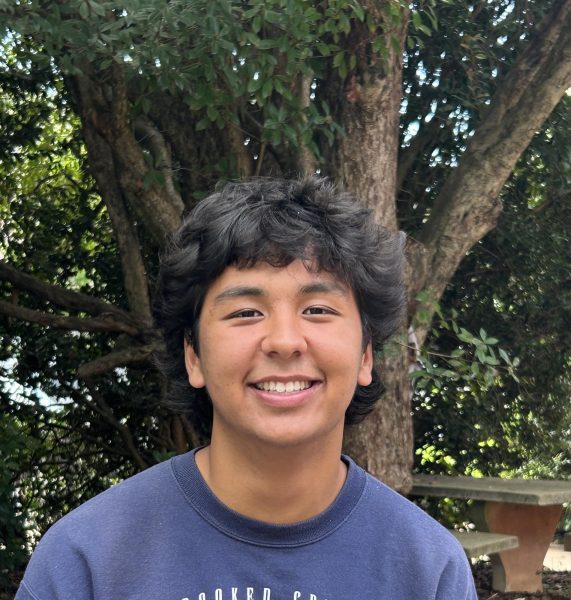
CSD senior, Akhilan Kumaran (‘26), also values lessons his parents have taught him.
“My parents taught me that you don’t chase a person who doesn’t treat you with respect. I’ve seen other people struggle with this but my parents raised me to value self respect,” Akhilan Kumaran said.
When you think about it that way, almost every conflict in “The Outsiders” is caused by a mistake that a parent’s advice could have prevented.
I came away from the book thinking about new perspectives, and I learned this: before we judge someone for doing something we don’t understand, maybe even something that baffles us, we should realize that we are learning things from our parents all the time. There are people around us all the time who are learning things the hard way that we got to learn from our parents’ stories or other guidance.
Adventure books featuring kids and teens that conveniently do not feature parents are common. I didn’t linger on this detail when I was younger, but it stands out to me now as a main difference between my reality and that of my favorite characters. In “The Outsiders,” S. E. Hinton does more than just leave out the notion of parents so her characters can go on dangerous adventures; she uses it to highlight their innocence.